 Into the Wild
 9 sermons




If you'd like to, turn in your bibles to Genesis chapter 28, and we're gonna be reading from verse 10 through to verse 22 as you turn there.
My name is Tom Sweeman. I'm 1 of the pastors here, and, it's lovely to welcome you here this morning and, again, to anyone joining us online. This is a series that we've been working through for some weeks now. We took a little bit of a break last week, but we're back in it this morning, and this really is an extraordinary moment both in the scriptures and in Jacob's personal life. So we're gonna read Genesis 28 verse 10.
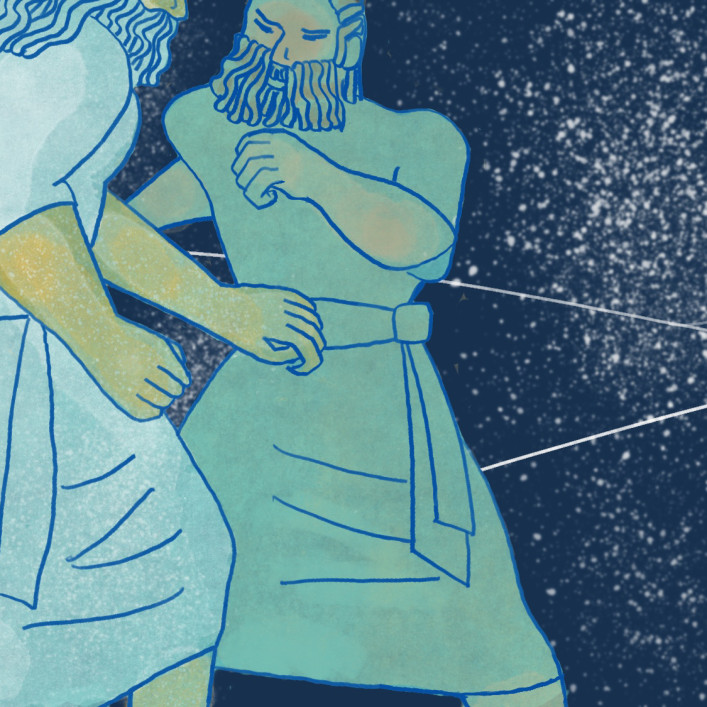
Jacob left beers Sheba and set out for Haran. When he reached a certain place, he stopped for the night because the sun had set. Taking 1 of the stones there, he put it under his head and lay down to sleep. He had a dream in which he saw a stairway resting on the earth with its top reaching to heaven, and the angels of god were ascending and descending on it. There, above it, stood the lord.
And he said, I am the lord, the god of your father Abraham and the god of Isaac. I will give you and your descendants the land on which you are lying. Your descendants will be like the dust of the earth, and you will spread out to east and to the west to the north and to the south. All peoples on earth will be blessed through you and your offspring. I am with you, and we'll watch over you wherever you go, and I will bring you back to this land.
I will not leave you until I have done what I have promised you. When Jacob awoke from his sleep, he thought, surely the lord is in this place. And I was not aware of it. He was afraid and said, how awesome is this place? This is none other than the house of god, this the gate of heaven.
Early the next morning, Jacob took the stone he had placed under his head and set it up as a pillar and poured oil on top of it. He called that place Bethel, though the city used to be called Luz. Then Jacob made a vow saying, if god will be with me, and will watch over me on this journey I am taking, and will give me food to eat and clothes to wear so that I return safely to my father's household, then the lord will be my god. And this stone that I have set up as a pillar will be god's house, and all that you give me, I will give you a tenth. This is god's word to us this morning.
Some weeks ago, I was, in a news agent, and, I saw a copy of this on the shelf, Steven, if you'd like to put it up, please. It's a national geographic magazine, and it's entitled, is it up there? Certainly was. There we go. Oh, back we go.
There we go. It's the story of god from the roots of religion to the future of faith. So as I say, this was published only a month or 2 ago. I'm not a regular buyer of this, magazine. But I couldn't resist that title.
And so I picked it up, and I bought a copy, and I've got it at home if you wanna save yourself a tenor and, borrow it off me. And, basically, what it does is it goes right the way back thousands and thousands of years, and charts the evolution of human religion. So it goes back into the, the caves and the neanderthal, ways of worshiping whatever gods they would have worshiped and explore some of their ancient burial sites and looks at their paintings and tries to see what religion looked like for them, and then it follows it right the way through the kind of inception of the major, world religions that there are today, as well as some of the more obscure ones that exist. And then it finishes with a sort of prophetic chapter on what the future of religion is gonna look like. And there's articles in there about AI church and Chat GPT church, which already exist.
There is a congregation in Germany that was experimenting with an AI chat GPT pastor. That kind of runs the service for you and preaches, and you can design him as you like him. So it's ideal. He can be whatever ethnicity you want. He can speak with a bold confrontational or tone.
Or a more sort of gentle retiring tone. You can sort of design your own chat GPT pastor. There was some little Buddhist children, wearing these VR masks, sort of eye pieces, and sort of experiencing, sort of Buddhist religion, through that. And so it's going on and on and looking at what religion might be. Now, if I had to sort of, summarize the the overall message of that publication, if I had to sort of put it in a sentence, it would it would be something like this.
According to National Geographic, there is almost certainly no god. But if there is then he or she or it or that or they can be accessed by all of these different religions. That's really what it's trying to say. That although human religion has looked very different over the years from cave paintings to AI, basically it's all sort of trending in the same direction. We're all going via different routes to the same god or spiritual experience that mankind has been after for millennia.
That's that's basically, I think, the message. So it's a bit like Stephen, this next picture, please. This this sort of old way of thinking about it, where you had 1 mountain, and at the top was god, And the major world religions and even the minor ones, Islam Christianity and Hinduism, they're just different routes to the same thing that eventually we all get there in the end. So you might prefer cave painting and carvings I might prefer ritual washing in rivers. Others might prefer sort of more traditional Christian roots, but largely we're all actually heading towards the same thing.
We're just we're just choosing different paths. I would say it's, that National Geographic magazine is articulating the same kind of key message. But in response to that, comes the message of the Bible. The world wants to lump all the major religions in together But Christianity really does belong in a category all of its own. Cannot be lumped in with every other expression of religion.
It belongs in a category all of its own. And there are several reasons for that, but 1 area in which the difference is very obvious is in how you and I get right with god. How we get into a right relationship with God. And what I want to do is to try to illustrate that difference by getting you to imagine 2 staircases. So if you can picture 2 staircases, the first staircase is a ground up staircase.
In other words, it starts with us, and we are building this staircase by which we're gonna reach god. So the religious things that we do are just different steps on the ladder or the staircase. And we can build up, and if we baptize our children and say the right creed or we wash in the right river or we say the right prayers or we give enough to charity, those are all steps on a staircase which will lead us to god. And as we go about it, we're just hoping that he won't push the button and turn the staircase into a slide so that we fall right back down and have to start again. That's 1 way of thinking about it.
And if you want a biblical illustration of it, that would be a kind of staircase that we would find in Babel, the story of Babel. So here's Genesis chapter 11. Stephen, if you could put that verse on the screen, this is a well known story just from a few chapters earlier. The people of Shinar and other provinces come together and they say, let us build ourselves a city and a tower with its top in the heavens. This is staircase number 1.
Okay? Let us build ourselves. Let us build ground up, and we'll get to the top. And let us make a name for ourselves. In other words, in our religious efforts and our building towards god, we will make a name for ourselves lest we be dispersed over the face of the whole earth.
And so this is category number 1 into which, really, all of the major world religions of the day, Barr Christ's religion actually sit. It is a ground up staircase by which we build in order to meet god. And if you ask, okay, what is the spiritual origin of that type of religion? It is Genesis chapter 3. It's the words of Satan.
That's that's a Satan way of doing it. Remember what he says to Adam and Eve? You can be like god. You shall be like god. You can be like god.
You can. You can build. You can do it. If you do the right things, you can do it. You can become like god.
So that's staircase number 1. Staircase number 2, which only has 1 world religion in it, and it's the religion of the lord Jesus Christ, is the staircase that we find in Genesis chapter 28. The 1 we've just read of, this heavenly ladder, in which god comes down. This is not a ground up staircase. This is a delivered from heaven staircase that comes from heaven to earth.
You notice god Coming, you notice these angels, these heavenly messengers who are coming from heaven to earth ascending and descending. This is a message not that we've come up with, but has come from heaven and is gonna be proclaimed by these angelic missionaries. And then you notice, have a look at verse 13. Here's the vision, there above it stood the lord, but look at the footnotes, quite an interesting other way of translating it, or there beside him stood the lord. There above it, the ladder stood the lord, could also be there beside Jacob stood the lord.
And so do you see this is a heavenly ladder? Not 1 which we create in order to reach god, but which he uses to come down to us? Very different way of looking at things, isn't it? And that is why Christianity really does belong in a category of all of its own because this is the true biblical faith. Not of man building up to god, but of god coming down to us.
Not of us bridging the gap between earth and heaven through our works, but of god in Christ bridging the gap between heaven and earth by his grace. And so National Geographic would wanna lump them all in together. But that's just 1 example of why Christian faith is so utterly different because in Christian faith, it's not babel. It's not us building to him. It's him graciously coming to us.
And it seems to me that that is the great doctrine and the great subject of this passage that we've just read. And so we're gonna look at the story, but we're gonna look at it as a way of explaining what grace is all about. So we're gonna have a think about the subject of grace today in the life of Jacob and in our lives. And the first heading for us this morning is this. Who is Grace for?
It's for runaways and hideaways. That's who Grace is for. It's for runaways and it's for hideaways. If you haven't been with us in this series, we've been following the life of Jacob in the book of Genesis. And at the start of this reading, verse 10, we find him on the run.
Jacob left beersheba and set out for Haran. And now why is he doing that? Why is he on this journey? Well, because his family life is now a complete shell and wreck and mess. You might remember that scene we looked at 2 weeks ago where Jacob with the help of his mother manages to take advantage of both Isaac and Eesaw tricks Isaac, his dad into getting the blessing, and then Eesaw comes and discovers it.
He's howling, screaming. He's absolutely broken. And then Rebecca's solution to all of this is basically to get Jacob out of town before he saw his brother decides to murder him. And so in chapter 28, we now meet a Jacob with his deception fresh in his mind his brother, baying for his blood, and he is now a refugee. He's been driven out.
He's fleeing persecution, but his own sin has also played a part in this. So he's not a truly vulnerable refugee. He's a refugee, but a sin refugee. And so he's he's on the run. K?
And look where we find him in verse 11. When he reached a certain place, he stopped for the night because the sun had set. Taking 1 of the stones there, he put it under his head and lay down to sleep. And so you are to imagine him there with no tense And with no city, he's out in these wilderness planes. He's got nothing but a stone for a pillow, and the heavens are his curtains, and he's he's all alone in the wilderness.
Now for many people today, that sounds like the ideal form of escapism, doesn't it? You know, to get out into the wild and to sleep under the stars and to be away from the pressures and the noise of London, we would pay quite good money, for this kind of experience, wouldn't we? And yet, actually, for Jacob, this physical landscape is a picture of his spiritual condition. Do you see how sin has isolated him? And it's alienated him.
Sin does have that effect on our lives, doesn't it? Even though we might remain in the company of people, sin has a very isolating effect. Can make us feel lonely on the inside because we've cut ourselves off from god. We've cut ourselves off from accountable relationships. Nobody really knows what's going on with us, and we're not talking to god anymore.
And all of a sudden we're quite lonely. Jacob is spiritually and physically lonely. He's also in a wilderness place. And sin can do that to us. Can't it?
It disorientates us. We no longer know which way is east and which way is west, which way is north and so we're in a sort of wilderness. And we're not sure where we are. We just know we're not where we should be. We also notice the light levels.
Do you notice that in the text? Where's the sun? Where's the sun? The sun is setting. It's getting darker in Jacob's life.
Now you know if you read through the Bible that light stands for truth, warmth, clarity, going the right way, doing the right thing. That's what light's about. But for Jacob, the sun is setting. He is living with the darkness of his deceitful decisions. He he's he's in the dark physically, and he's in the dark spiritually.
And I think perhaps most significant of all, Jacob has not come here in search of God. You know, some people go to these kinds of places on pilgrimage, don't they? You know, they will sort of go on the camino, De Santiago or whatever, and they'll they'll choose a wild, lonely route in order to connect with god. They go lonely so they can meet god and have a experience of god. Jacob has no such pilgrimage in mind.
You know, he has not come out to this place in order to seek god and to have a devotional retreat. That's just not on his mind. You know, he's not here, is he walking the world? And I say, god, I've made a mess of my life. And god, would you come and find me in god?
Forgive me, and where are you god, and lead me a fresh god, and come back in there's no sense of that in his life. He's been driven away by his deceit and his murderous brother. He's lonely because of sin. He's wild because of sin, and it's dark because of sin. And he's not after god anymore.
He's a runaway and he's a hideaway. And yet god is gonna meet him there. God is gonna meet him as a runaway and as a hideaway. And I guess for many of us here, our own testimonies would follow a similar line. See, I can tell you for for certain when I came to Kingston in 2008 to study in Kingston, I had not come here in search of god.
I had not come here in search of god. I did not come to this place because I saw it had a great church. And I thought that this would be a place where I could investigate the Christian message and hopefully meet some Christian friends who would tell me about a Jesus that I'd been ignoring. And that if I could just leave Bristol and get to Kingston, I would meet god in there, in this wilderness place. And that was none of that was in my mind.
None of that was in my mind. And yet, god in grace met me in this place. He met me and he led me towards a Christian church and a Christian gospel and Christian people who would love me. I did not come here in search of him, and wouldn't our own testimonies follow a similar route. You think about when you got converted to Christ.
Could you look back and say, I was in that place because I was after god, and I wanted god, and I wanted to meet god, or was it rather on reflection the case that god in grace came after you, a runaway and a hideaway, and he met you there. And he opened up heaven and he dropped a ladder for you there when you were running away and when you were hiding away. That's what Jacob is about to experience. I mean, think of him. Think of him.
He's stolen. A blessing. He's wrecked. His family. He's dishonored.
His loved ones. He's walked away from God. And yet god is coming after him. And god is gonna give him a ladder. Jesus said in the new testament, it is not the healthy who need a doctor.
It is the sick. I have not come to call the righteous, but runaways and hideaways and sinners. That's the babel thing, isn't it? I have not come to call the right us? Who are they?
Those are ground up builders. I have not come to call them because they're on their staircase, and they think they're righteous and they're building, and they're gonna reach me. So they think I've got nothing for them. I have come to call sinners. People like us.
People like Jacob who've run away and who've been hiding and are alienated and are isolated and are isolated and just like Jacob, where's his face? Where's his face? It's in the dirt. His face is in the dirt, and god is gonna open heaven and meet with him. And so that's who Grace is for.
It's for runaways and it's for hideaways. But what is it? We've seen who it's for, Now let's look at what it is. Grace is awesome, and it's amazing. It's 4 runaways and hideaways.
What is it? It is awesome, and it is amazing. Have a look at it verse 12 to 14. He had a dream in which he saw a stairway resting on the earth with its top reaching to heaven, and the angels of god were ascending and descending on it. There above it stood the lord, and he said, I am the lord, the god of your father, Abraham, and the god of Isaac, I will give you and your descendants the land on which you are lying.
Your descendants will be like the dust of the earth and you will spread out to the west and to the east to the north and to the south. All peoples on earth will be blessed through you and your offspring. At the end of the service, we're gonna finish by singing amazing grace together. Amazing grace. And originally, that word amazing means amazing.
You know, it means to be deeply impressed by something, to be thunderstruck, to be stopped in your tracks, to not know what to do, to be amazed for something to make a deep impression upon you as the grace of god did, in John Newton's life, amazing grace. The trouble with our language, or at least the way we use it, is that words like amazing and awesome tend to use lose their original meaning through misuse and overuse. Don't they? We use amazing and awesome too much and for the wrong things. And so we might think that a flat white is awesome.
You know, you should get they do an awesome flat white, you know, or this new deal on socks that they've got. It's amazing. This deal they've got. And we use the word so liberally that actually the original meaning becomes watered down to the point that a flat white can be an awesome thing. And yet, really, you know, I'm not out to be a, you know, vocabulary police, but really, we ought to sort of try at least to keep proper words for proper things.
Yeah? Because what we see here, the word awesome is here. How awesome is this place? God has come and stood with him. That's an awesome thing.
But the nature of the promises I mean, this is not just amazing grace, really. This is this is scandalous. It is scandalous grace. That Jacob is shown here. Look again at verse 13.
There above it stood the lord, and he said, I am the lord, the god of your father, Abraham, and the god of Isaac. Now given what you know about Jacob, how are you gonna finish that? And I've come to punish you, man, for what you've done. And I've seen the mess that you've made of your family. And I've seen your deceiving and your trickery, and I'm opening heaven, not with a ladder, but with a rod.
And a rod is coming down on you, man, and I'm gonna punish you for what you've done. It's 1, and we'd say fair enough. Probably, wouldn't we? Or we could say there above it stood the lord, and he said, I am the lord, the god of your father, Abraham, and the god of Isaac. Now, you take yourself back to beers Sheba and fix it up, man.
You go fix it. If you want anything to do with me, you need to go back and you need to put it right. Go and fix it. In other words, we would expect god to say Here's some woods, nails, and hammer. Now you build yourself a ladder man.
You build it. You wanna get back to me. You build it up. Scandalous, isn't it? He saw, in his dream, a stairway resting on the earth, with its top reaching to heaven, and the angels of god ascending and descending on it there above him, stood the lord.
And he said, I am the lord, the god of your father, Abraham, the god of Isaac, and what's he going to say to a grabber? I will give. He says to a grabber. I will give. That's scandalous grace, isn't it?
And just notice how unreal this must all have seemed to him. Despite everything that you've done, Jacob. You who are all alone in the wilderness are gonna be a great nation. He's just 1 speck of dust blowing in the wilderness wind. 1 little speck of dust.
How unreal that must have seemed? You're gonna be a great nation. He says to a man who is a refugee with no home, you're gonna get a great home. I'm gonna give you a home. It's so ironic because the home that he is going to inherit is the very same 1 he's fleeing from.
He's running from it at the moment, but god is gonna give it to him. And he's gonna inherit it. He says to this blessing thief that through him, a generous blessing is gonna come to the world. That's quite something, isn't it? Blessing thief through you, blessing is gonna be given to the world.
You who have cut yourself off from God. I have opened heaven for you. And you notice how personal this all is. Look again with me in verse 15 and 16. Let's pick up the second half of the promise.
Count how many use there are with me. I am with you, 1, and I will watch over you, 2, wherever you go, 3, and I will bring you back 4 to this land. I will not leave you 5 until I have done what I have promised. You. I was with Abraham, and I was with Isaac, Grand Dad and Dad.
And now I'm gonna be with you. You, Jacob. These promises are personally applied with you. You know, sometimes as, as preachers, or I I would guess anyone who's trying to communicate bible truth to other people. You know, we we worry about whether the personal nature of the gospel and god's word does actually come across.
When we open it up and we're trying to share something about Christ and the life that Christ calls us too and the things that Christ has done, do we understand as listeners? Do we understand as listeners that it is for us personally. See, sometimes I I think, yeah, we can hear messages like this, and we all know it sort of applies to somebody out there, and we hear words like Christ offers himself to you And we sort of think it means a sort of you out there, like you you all, or you over there, or you somewhere else, or y'all, or, you know, or that, you know, it can be like that with notices sometimes. I think as well, can't it? You know, there's events coming up, and it it will be good for someone somewhere, to be at this thing.
And I'm sure whoever goes will have a good time, but it probably doesn't mean me. It probably means somebody else. It's and so I think the trouble with crowds hearing is that we think the you means something else. I don't know. But do you notice the Lord is not gonna let Jacob get away with that?
Abraham Isaac, and you, you, Jacob, you, in the place that you're in where you're running and you're hiding you. That's who it's fall. It's for you. On this seat, row 1 4, at seat 4, and that seat row 5 6, and at that seat, row 24 for it's for you. Every other Wednesday, the, elders have a zoom prayer meeting between 6 30 and 7 o'clock.
And, this week, we were praying that this would be a place where we come along as a church and we enjoy fellowship and we enjoy good times together, but that this would be a place where we personally meet with God, where we personally, as individuals, meet with God, where we come away saying how awesome is this place? How awesome is this place? Not because this building is in itself awesome because really that would be a wrong way to use that word. But because here, the Holy God of heaven put his ladder down, and he met me. He met me a runaway and a hideaway.
Tiffin's school, and we're so we are so grateful for this venue, but Tiffin's school is not Bethel. This is not the house of god in this place. This place is not the house of god. It's a school which we rent. We are Bethel.
The people of Bethel who gather in the building. But nonetheless, we want this to be a place like the place in Genesis 28. Where we understand on a personal level, the awesome and amazing grace of god. So that we come away saying how awesome is this place. That god has come and stood beside me today.
And he has met me where I was with awesome presence and amazing promises. How awesome is this place. And so I hope you always hear sermon use as you use. How awesome is this place? That's what it is.
Let's have a look at what does it do? So we've looked at who it's for. It's for runaways and for hideaways. We've looked at what it is. It's amazing and awesome.
Let's look at what does it do. It changes grabbers into givers. Grace changes, grabbers into givers. I love the detail. At the end, his verse 22, look what Jacob said Jacob says as part of his response to all this.
This stone that I have set up as a pillar will be god's house. And all that you give me, I will give you a tenth Now this is not the Jacob that we're used to. Our Jacob doesn't talk like this. He doesn't talk about what he can give away. He talks about what he can unlawfully steal.
That's him. He plots any plans in order to take what isn't his. You remember him when he emerged forth from the womb all those weeks ago, grabbing his brother's heel, grabbing a body that didn't belong to him. It was symbolic of his life that he was gonna grab that, which didn't belong to him. Now after an encounter with the living god, he's saying, oh, that you give me, I will give you a tenth.
This grabber has become a giver. And so could we say that this is something like a conversion in Jacob's life? Now there's very many different views on that. So some people would say, no. This is This is this is classic Jacob.
This is not a change Jacob. This is classic Jacob. Look at his conditional vow. Yeah? Verse 20, then Jacob made a vow saying, if If, if, if god will be with me, and will watch over me on this journey I'm taking.
And if he's gonna give me food to eat and close to here so that I return safely to my father's house, if he puts all that in my bank, then the lord will be my god. He's gotta prove himself to me. Otherwise, I'm not gonna give him anything. Classic Jacob. It's a sort of, yeah, sounds good, but let me do it my let me do it my way.
Let me trick you out of it. That's 1 interpretation. You know, I'm not I'm not totally convinced by that that it is such a negative vow. Now, don't get me wrong. Jacob has certainly got a way long way to go.
I mean, he this this guy has got some sanctifying work ahead of him. There is stuff that needs to be done in his life, and god is going to do it. But notice what he calls god in verse 21. I do think this is really significant. So that I return safely to my father's household, then the lord will be my god.
Now why is that significant? Because the only other time that Jacob has talked about the lord god is 1 chapter earlier in chapter 27 verse 20. Chapter 27 verse 20. And Steven, if you'd be happy to put that verse up on the screen, you remember this is Jacob mid deception. He's in the middle of his lie, and he's gonna take the name of Yairway on his lips.
And how's he gonna talk about him? Isaac asked his son, how did you find it so quickly, my son? Where did you get it? So fast? The lord your god.
The lord your god. Your god gave me success. By the time he gets to 28 verse 21, he talks about the lord of heaven being his god. And that's a that's the beginnings of a Christian person, isn't it? When you say, the lord was not just my dad's god, and he was not just my granddad's god.
The lord is now my god. It's my god. He's gonna be my god. Gordon Wenham in his excellent commentary on this, Steven, if you could put the quote up. He interprets it this way.
Some have questioned Jacob's faith in making a vow contingent on his safe return to his homeland. When this had just been promised by god. But real experience of god must always result in heartfelt worship. Here, he gave all he had. The stone and the oil, and he promised to give a tenth of all his future income when his affairs improved.
To pray for a safe return showed faith, not unbelief. Indeed, throughout scripture, the basis of prayer is divine promises. It is because we have been promised food closed and the forgiveness of sins that we pray. Our father. Give us this day, our daily bread, and forgive us our debts.
So probably this is a matter of tone. If you look back to verse 20, I don't think it is to be read if god will be with me, and if he'll watch over me. And if he's gonna bring me back, and if he's gonna provide for me, and if he's gonna bring me, sir, then the lord will be my god. I don't think it's that kind of tone. But rather something like, if god is gonna be with me, and if he is gonna watch over me on this journey I'm taking, and will give me food to eat and clothes to wear so that I will return safely to my father's household.
Then the lord will be my god. And so rather being a conditional if, it's more like a since if. Since the lord will be with me and will watch over me. And since He's gonna be with me on this journey. And since he's gonna provide for me, then the lord will be my god.
And so you see that grace never leaves a person unchanged. When it comes to us and we understand what it is, it never leaves us unchanged. And so it seems to me that Jacob is a bit like an old testament version of Zacchaeus. You know that story when Zacchaeus has been converted. What was his testimony?
He was a master of extortion, wasn't he, Zacchaeus? He was a tax collector who took what, not just what was needed, but more than He was used to extorting people a bit like Jacob, the deceiver. What does he say when he has an encounter with god? He says, half of my possessions I give to the poor, And if I have cheated anyone out of anything, I'm gonna pay them 4 times as much. The extortioner becomes a giver.
All of a sudden, he's talking about giving and not just taking, but giving. It seems to me that Jacob is the beginning of a zacchaeus type character. Because in verse 22, all that he has, the stone and the pillar, and all that he gives is gets, I will give you a tenth. Grace changes grabbers into givers. Lastly and quickly, where do we get it?
We've looked at who it's for. We've looked at what it is. We've looked at what it does, and now let's spend a few minutes on where we get it. Here's John chapter 1, Stephen if you'd be willing to. Put that up.
Here's the lord Jesus. And in verse 47, It says when Jesus saw Nathaniel approaching, he said of him. Here truly is an Israelite in whom there is no deceit, which is a very interesting little nod to the Jacob story. In fact, 1, old testament commentator translates it this way. Here truly is an Israelite in whom there is no Jacob.
There's no Jacob in this man. There's no deceit. He sees something of integrity bottom to top. No matter which way you cut him, there's something of an integrity about this man, an Israelite in whom there is no Jacob. How do you know me, Nathaniel?
Last Jesus answered, I saw you while you were under the fig tree before Philip called you. And who knows? But that Nathaniel sitting under that fig tree may have been meditating on this exact portion of scripture. Could be, couldn't it? Could be.
It would be a really nice tie in from Jesus. Given what he's about to say. Sitting there under the cool of the fig tree, meditating on the story of the heavenly staircase. Then Nathaniel declared rabbi, you are the son of god. You're the king of Israel.
He doesn't need much to get converted, this man. It's just a, you know, I saw you. You're the gods. You're you're you're from heaven. You know?
Amazing. He obviously sees something about Christ's supernatural knowledge of him that brings out this confession. Jesus said, you believe because I told you I saw you under the fig tree. You will see greater things than that. He then added, very truly I tell you, you will see heaven open, and the angels of god ascending and descending on the son of man.
So we have these 2 staircases. 1 is the tower of babel. It's a ground up. Us building. Trying to get to God.
And we have a ladder down. A ladder down. Someone from heaven coming to earth to bridge the gap. And when the lord Jesus Christ thinks about this story in Genesis 28, he says that is an ideal picture. Of who I am and what I've come to do.
The angels of god ascending and descending not on a ladder, but on the ladder. On the 1 who has come to bridge the gap. Between heaven and earth. Friends, that is why the lord Jesus Christ came, isn't it? He came to bridge the gap between us and god.
He came because the world is full of runaways and hideaways. Full of people on whom the sun has set, and they have grown dark in their sin. And he has come to tell us not to try to build up, but to trust him who came down, and who died for all of our sin and who was resurrected the third day, and now reigns with god, the father, and glory. And offers himself, not just 2 rooms, but to individuals that make up rooms. He offers himself in grace that if you will turn from your sin, you will find the gap bridged forever.
Between almighty God and yourself between heaven and earth. See, we can be so good at running away and hiding away. We can be so good at sitting in sermons and saying, I can think of reasons why it's not for me still and why it's probably for somebody else. But the lord Jesus Christ comes to us this morning, and he says I will meet you where you are. I'll meet you where you are, and I'm not gonna leave you there.
Because I'm gonna make grabbers into givers. But I'm gonna meet you where you are. That's what he does with Jacob. He meets him where he is with his face in the dirt, and he doesn't say first go back and put it all right. He doesn't say first absorbs some punishment, and then we're good.
He meets him where he is with gospel grace and with gospel promises. And the lord Jesus Christ descends as it were that ladder of fresh this morning. And he offers himself to you and he's ready to bridge the gap. Should we pray? Lord Jesus Christ, we thank you that there is a way for lonely isolated in the dark sinners who've made a real mess of things to get connected to heaven again.
Lord, Jesus, we repent of our own efforts to build a staircase from the ground up. We're sorry that we so easily drift into that way of thinking that if we can just do enough for you or fix our pasts a bit, then you'll love us and you'll come to us and you'll approve of us again rather than being amazed by the grace of the gospel. That you come to us in our sin with promises to love us and forgive us and save us and give us a new creation land 1 day and to give us a blessing we don't deserve and to give us an inheritance that we don't deserve, it's incredible grace that you meet us with in the lord Jesus. Help us, please. We are grabbers.
We're liars. We're tricksters. Help us please by the grace of the gospel to become givers, to be those who go forth from this place. Having known your grace to serve you, we pray in Jesus' name. Amen.