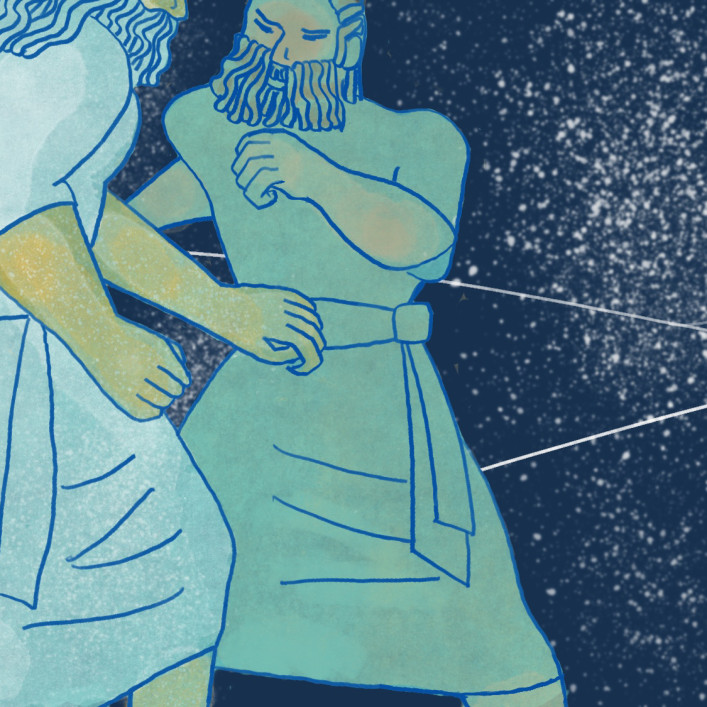
 Sliding Doors
 9 sermons




Genesis 25 starting at verse 19.
This is the account of the family line of Abraham's son, Isaac. Abraham became the father of Isaac, and Isaac was 40 years old when he married Rebecca, daughter of Bethuel, the Arameleon from Padan Aram and sister of Leben, the Aramayan. Isaac prayed to the lord on behalf of his wife because she was childless. The lord answered his prayer, and his wife Rebecca became pregnant. The babies jostled each other within her, and she said, why is this happening to me?
So she went to inquire of the lord. The lord said to her, 2 nations are in your womb, and 2 peoples from within you will be separated. 1 people will be stronger than the other, and the elder will serve the younger. When the time came for her to give birth, there were twin boys in a womb. The first to come out was red, and his whole body was like a hairy garment, so they named him esau.
After this, his brother came out with his hand grasping esau's heel. So he was named Jacob. Isaac was 60 years old when Rebecca gave birth to them. The boys grew up and esau became a skillful hunter, a man of the open country, while Jacob was content to stay at home among the tents. Isaac, who had a taste for wild game, loved eesau, but Rebecca loved Jacob.
Once when Jacob was cooking some stew, eesau came in from the open country, vanished He said to Jacob quick. Let me have some of that red stew. I'm famished. That is why he was also called Eden. Jacob replied, first, tell me your birthright.
Look. I'm about to die, Eesau said. What good is the birth right to me? But Jacob said, swear to me first. So he swore an o to him selling his birth right to Jacob.
Then Jacob gave Eesaw some bread and some lentil stew. He ate and drank and then got up and left. So Eesaw despised his birthright, Tom. Thank you for, reading that to us, Rory. And, good morning, everybody, and, very warm welcome.
If we haven't had a chance to meet my name's Tom Sweeman. I'm 1 of the pastors here. And, it's lovely to have you with us this morning. And, if you're joining us for the first time, it's particularly great to have you. And if you're tuning online, I know there are some people who are either on, bank holiday holidays or half term holidays, I think Guy and Lucy were planning to tune in from Portugal.
So if you've managed to do that, then, well done and welcome to anybody who's who's watching. Let me just say again about that translation service. I think they're might be a slide there it is. So if you would like at this point to scan that and log on and to choose the language that you're most familiar with, if that will help you, to engage with god's word this morning, then do do scan that. And let's begin our time together with prayer.
Heavenly father is your word is, opened and read and preached. We're reminded that these are not just moral instructions, and these are not just quaint stories from long ago. These are words that have been breathed out by the living god. And we know that all that is contained in this book is everything that we will ever need for life and for godliness. And so we pray Holy Spirit that you would use your word this morning.
To speak to each 1 of us here. We pray that if we need correction, we would hear your gentle correcting voice. We pray that if we need rebuke, we would hear your loving stern rebuke. We pray that if we need encouragement that we would feel your encouragement through your word. And for all of us, we pray that we might leave this place equipped to serve you and to trust and to love the lord Jesus Christ.
We're grateful heavenly father that just within a few miles of this place, there are other churches who are proclaiming your word right now. And so we pray for them. We pray your blessing upon hope church in Tollworth and Hook and, the King Center in Chestington and Christchurch Serburton and others father who were about this gospel ministry, we do pray that you would bless each of their congregations this morning with your word in Jesus' name. Now starting a a talk with a film reference, is always dangerous, because if you haven't seen it, then the next few minutes may be a little bit boring. I hope that's not the case, and I'm just gonna go for it anyway.
Okay? Because this film, it it is actually quite a famous film, and the title of it has even affected our language. So we're going back a little bit. This is 19 98. Okay.
So we're going way back to those dark ages. 19 98. This is a a young Gwyneth pout atro. And, she was in a film, that did pretty well, pretty famous, called sliding doors. I don't know if you've seen sliding doors.
Perhaps, really, we can get that the picture up, if possible. There it is, sliding doors. Anyone seen that? Yeah. Okay.
Alright. That's more encouraging than I was hoping. It to be honest, it doesn't actually matter if you haven't. Because this whole film hinges around 1 scene. Just 1 scene.
And so what happens in the story is you've got this lady called Helen. She's working in London for a company, and, she arrives at work, only discover that she's been fired. She's sacked from her job And so she leaves her job. She's very upset, and she runs through busy London, and she goes down to the underground, and she tries to catch a tube, and she's rushing through the platform in order to try to catch this tube. And then at that point, the story splits into 2 different narratives.
Yeah. Do you remember that, if it's familiar? It splits into these 2 different narratives. In the 1 narrative, Helen makes the train. The door's closed behind her, but she's on.
She gets home only to discover that her loser boyfriend Jerry is having an affair. And so he wasn't expecting her because she's supposed to be at work. And so she catches her boyfriend doing this. And then the rest of that narrative actually turns out quite well for her because she ditches the loser guy. She gets a new job.
She gets her hair done. She recovers. It's all happy, and she has quite a good life. Now there's a big twist at the end, which I won't go into. But that's narrative 1.
Narrative 2, she doesn't get the train. The door's closed, and we've all been there, haven't we? The door's closed right in her face. She can't make it. She can't get on the train.
And that story She doesn't make it home. She doesn't catch Jerry doing the dirty on her. She stays in her job, gets progressively miserable, and it all turns out badly. And so it's very interesting. You've got that 1 moment, just a very ordinary moment for a person who lives in London and these 2 narratives.
And it's just quite an interesting story because then the whole film, you've got these 2 narratives going side by side, showing how just 1 little ordinary decision or mistake or hand of chance has the power to alter the whole course of somebody's life. Now in reality, as you know, very rarely is it the case that so much hangs upon so little? And yet, 1 of the reasons I think people like that film is because it invites a bit of self reflection. Are there moments in my own life where something so small actually altered the course of my life? Could be anything.
Could be a date that you said yes to or a date that you said no to. Could be a plane that you missed or a plane that you caught. It could be a job that you turned down or a job that you accepted. It could be a relocation offer that you accepted or said no to. It could be a treatment plan that you said yes to or a treatment plan that you said no to.
Just 1 perhaps small decision, and you cannot help but wonder, yeah, if I hadn't done that, or if I had done that, what would my life be like? Mean, where would I be now if I'd said no to that instead of yes, if I'd gone with her instead of her, or, you know, where where where would my life be? So in my own case, I think I've got a time a little bit like this. It's July 2008, July 2008, And I came home 1 day, and I was so tired of smelling like fish. Okay?
I've been working in a fishmongers and a fish restaurant loads of hours. Okay? And I was fed up of smelling like fish. Okay? That summer, on that day in July, I then decided to go on to the UCaaS clearing website and decided to change my path and thought, why don't I just go to university after all?
So I went on clearing chose a course that I'd never really looked into before, geology, chose a location to study it, which I'd never been to before, Kingston. And within 2 months, I'd moved to Kingston having never studied geology and never been to Kingston in my life. And now I was living there 18 months later, I'd got converted and met my wife, and I've never left since. It's amazing, isn't it? 1 moment bored of smelling like fish goes online, seeks a new career.
Where would I be now if I hadn't have done that or if I had have done that? And I wonder if you've got a little moment like that, a sliding door's moment. That's the expression. A sliding doors moment where something happened or something didn't happen, and it altered the course of life. Now as Christian people, in the end, we know, and this is wonderfully liberating, that behind every sliding door, is actually a god of wonderful providence.
We do not live at the mercy of chance, and we do not live in a universe where we can explore many different options, and we don't need to because we have a great god of providence who works all things together, even mistrains to the good of those who love him. And so we rest in a providential god. And yet, it is for limited minds, an interesting point of reflection, isn't it? What what what are those moments in our lives where something happened or didn't happen, and the whole course of our lives changed. Now I say all of that because to my mind, at least, Genesis 25 verse 33 is like a sliding doors moment.
For Esaw and for Jacob. We're in a kitchen with 2 brothers. There is 1 dinner table, and there is a bowl of lentil stew on that table. This is a very ordinary run of a mill domestic scene. This is the sort of scene that would be reenacted in kitchens all across the ancient world and today, 2 brothers in a kitchen with a table and a bowl of lentil stew.
And yet what happens in this moment is gonna change the course of their lives forever. For Jacob, this is not a chance moment. Like the catching or the missing of a train. This is a carefully planned calculated moment. For esaw, this is a moment of desire, an appetite, and passion where his hunger gets the better of him.
But for both of these brothers, what happens in this kitchen is going to change and alter their destinies forever. This really is their sliding doors moment. Which changes both of their lives. Now if you weren't here last week, we began this new series looking mostly at Jacob, but really he's inseparable from those who were around him. And you remember we began last week With that headline verse, which sits over his life, hosea 12 verse 3, which says of Jacob, in the womb, he grasped his brother's heel as a man he struggled with god.
That's his life. As a woo in the womb, he grasped his brother's heel as a man he struggled with god. And we saw last week, if you were here, that Jacob's life of struggle began even before he was born. And so we looked at that part of the narrative that we've just read where you've got Isaac and Rebecca, and they together have endured 20 years of childlessness, 20 years of prayer and disappointment and month by month frustration. It's been a struggle for this family.
So before Jacob is even conceived, struggle is the word that sits over his family. And then we saw that remarkably, and by a miracle of god's grace, and in response to Isaac's prayer, Rebecca does conceive, and then the pain of 2 decades without a kid is replaced by this terrifying pregnancy. She doesn't know what on earth is now happening inside of her womb. She probably wished it could be normal. After 20 years of pain.
And, yen, she finds these fighting babies inside of her. And so she goes to inquire of the lord who responds with that prophecy, and we looked at it last week in verse 23, 2 nations are in your womb and 2 peoples from within you will be separated. 1 will be stronger than the other, and the elder will serve the younger. And this morning, we're gonna pick up the story in verse 27 and work our way towards this sliding doors moment. And essentially, the action in this part of the story happens in 2 places.
You've got the scene in the delivery suite, and you've got the scene at the dinner table. Those are where the actor to the story is told. So we're going first to the maternity ward and the delivery suite, then we're gonna go to the kitchen. Okay? So this is the first point, first location, the delivery suite, verse 24 to 25.
When the time came for her to give birth, there were twins in her womb. The first to come out was red, and his whole body was like a hairy garment, and so they named him esau. Now we're not told that there is a midwife present in this story, but for the sake of argument, I want you to imagine that there is. Okay? There's a Hebrew midwife here who's helping Rebecca give birth to these children.
And as the first 1 comes out, it's something of a surprise. So esaw comes out, and we're told in the text that he was red. Now that probably doesn't mean that he had red skin. It's probably referring to his red gingery hair. Okay?
So he's red. That's the first thing. And his whole body is covered in hair. Now I wrote to my sister-in-law this week who's a midwife, just to ask if she's ever experienced anything like this in her professional life, whether she has seen a baby born covered in hair, and she had to ask me a few clarifying questions because she wasn't familiar with this story. And when I described what I think he probably was, she said I've I've never seen something like that.
Then Emma in the office suggested I Google to find out whether a baby has ever been born with this amount of hair, which I did do, and which I wish I never had done, because it's a pretty appalling site. So I would strongly caution you, against typing that particular thing into your search engine later on. But this is Eison. Okay? He he's kind of red.
He's covered in hair, and so you can imagine the midwife laying hold of this thing and saying to Rebecca, well, you know, congratulations, I suppose. I don't quite know what this thing is. It's like you've given birth to a fleece or something. But here you go. Enjoy.
You know? So that's that's Eason. And it's interesting because those details about him, red and hairy give rise to his name. You look at verse 25, how the sentence goes together. He was red and his whole body was like a hairy garment, and so they named him esau.
So his appearance led them to give him a particular name. Now you can see in the footnote, if you've got a paper copy of the Bible, and this just as a by the way is why it's always worth bringing a paper copy of the Bible because the footnotes sometimes are very helpful. We're told that esau may mean hairy. So it's a bit of a tricky word but it looks like it means hairy. Now the interesting thing about the word esau is that it's also closely related to a Hebrew word, which means to do or to make it happen, to do or to make it happen.
And I think that's quite significant for esau. Because as you follow along with his life, you see that he is a doer. He is 1 who wants to make stuff happen. That's what he likes to do. He wants to go out into the fields and the woods, and he wants to make stuff happen, wants to do stuff, wants to chop down a tree, and he wants to shoot an animal, and he wants to skin an animal, and he wants to make a barbecue and have a fire, and he wants to dig a trench, and he wants to find a well, and he wants to get up water.
That's his life. He's a make happen doing kind of person. He won't sleep at night unless his hands are callused because he's done something. He's a make it happener. And it's interesting.
I do wonder whether that is even obvious from his beginnings. When Esoar is born, His appearance, it's like he skipped childhood. And he's just been born a man, you know, because he's thinking, I'm I'm not, you know, I'm done with childhood. I'm a man baby, and I'm ready to go out and make things happen in the world. Yeah?
That's the kind of character he is. He's 1 who's got desires of the flesh, and he wants to satisfy them straight away and get out into the world and to make it happen. So that's easaw, red, hairy. He's a doer. But the midwife then spots something else.
She can't quite get him free. Verse 26, why is that? After this, his brother came out with his hand grasping E source heal, And so he was named Jacob. And again, the footnote, Jacob means he grasps the heel. He grasps the heel.
Now in and of itself, That is not necessarily a bad thing. They called him Jacob because he grasps the heal. But the actions of Jacob turned that into a kind of bad thing. So it becomes a slang word for a deceiver. So it's not that his name is just automatically bad.
It's not like Judith, you know, where, you know, you're given the name Judith, and, you know, it just means it means you've done a terrible thing. Now I guess before Judith iscariot, that name perhaps didn't have those connotations. You know, you named a baby Judith, and that was gonna be a fine thing to call him. But now, not so much, because that name is associated with a terrible story. And Jacob's not quite like, you know, the name is okay, but actually what it becomes, he who grasps the heel, becomes shorthand for a for a deceiver.
And so it's interesting, isn't it? Right at the beginning of his life, Jacob is grasping hold of Esoar's heel. And really as the story unfolds, you see that is full of significance. This is not just a cute brotherly act. You know, oh, look, they don't wanna be separated.
You know, they wanna wanna stay together. You know, it's nothing to do with that. Actually, this is a window into the life of Jacob, and into the life of a man who is always going to be reaching for things that don't belong to him. From the first moment he emerges, he is trying to grasp at something, which isn't his, and that is gonna become so important for interpreting the story. And so as we see next, we've got esaw out in the field doing what he does, which is making stuff happen, and we've got Jacob in the kitchen plotting how to get what does not belong to him grasping.
And so that is the delivery suite. Let's come now to the dinner table. Delivery suite. Dinner table. Here's the sliding door moment.
Let's start in verse 27. The boys grew up, and esau became a skillful hunter, a man of the open country. He's a doer. While Jacob was content to stay home among the tents and plan to get hold of what he doesn't have. Isaac, who had a taste for wild game, loved Eesaw, but Rebecca loved Jacob, and we'll see how important that is next week.
Once when Jacob was cooking some stew, Eesaw came in from the open country famished. He said to Jacob, quick, let me have some of that red stew. I'm famished. Now, the original, honestly, makes e source sound like some kind of caveman here. Because the way that literally translates is let me gulp the red stuff.
That red stuff. Let me gulp the red stuff. That red stuff. Okay. So you've got to imagine him coming in from the open country opens the door slams the door, sits down.
He's hungry. He's famished. The lentils are there. He doesn't even really know what's in the pot at this point, but he says that red stuff. I give me that red stuff.
You know? He's like a caveman who's completely taken over with hunger. This is what you might know as anger if you're a parent, when you've got a child who's so hungry that they're angry. It's a kind of combination of hunger and anger and desperation, and he feels himself to be on death's door if he can't get a bowl of this stew. And that surely is an exaggeration, isn't it?
I mean, look at what he says. I'm about to die. I mean, it's so kind of, like, childlike, isn't it? You know, I'm gonna die if I don't get someone. He's almost certainly not about to die.
And yeah, that's how he that's how he thinks of himself. These are his app. These are his appetites. And from 1 angle, you know, if he is about to die, he's kind of right on this whole thing, isn't he? Because if he is literally about to drop dead, then the birthright really isn't that much used to him.
I mean, he's just gonna die, and it will be pointless to have inherited it. But the idea, no, this is some kind of exaggeration. He's a man of appetite, a man of desire. His desires have got the better of him. And so here he is, that red stuff.
Give me some of that red stuff. I'm about to die. Well, look at Jacob. Jacob is is absolutely ready for him. Verse 31, Jacob replied first, sell me your birthright.
I'm about to die, Eesel said, what good is the birthright to me? Jacob said, swear it to me first. I think there's something really chilling about that. It's the kind just the the brevity with which he speaks. I it's it's gives you goosebumps.
First, sell me your birthright. You can imagine him, can't you? Stirring the pot, thinking as he makes the stew. What have I gotta do? How can how can I work this so that I can get what I haven't got?
And then the opportunity comes. And there is nothing in any of his words that you could call general politeness. There is nothing that you could describe as brotherly concern. There is only this desire to begin to enslave his brother, to exploit his weakness. He knows it.
He's a calculating person. And he knows that his brother is at a point of great vulnerability, and he knows what to do in order to exploit him in his weakness to get what he wants. First, sell me your birthright, 33, swear it to me first. And then here's the moment, verse 33. So he swore an oath to him, selling his birthright to Jacob.
Then Jacob gave esau some bread and some lentil stew. He ate, and he drank. And then he got up and then he left. So the action is divided into those 2 scenes, the delivery suite, and the dinner table. The question is, what lessons are we to learn from these brothers in their sliding doors moment because it strikes me reading this that although these 2 brothers are very, very different in every way, from appearance to temperament, one's a daddy's boy, one's a mommy's boy, where they like to be, what they like to do.
For all of their differences, it strikes me that there is 1 glaring similarity with them both. And that is that they are men who are ruled by their desires. For esau, it's the desires of the flesh. He is ruled by the desires of his body. Esau's life is about here, and now, and food, and ***.
That's basically his life. And what I what I need in the flesh rules me. What does that make him? It makes him rash, and it makes him foolish. Jacob is ruled by a different type of desire.
He seems to be a man with this settled discontentment in his heart. A man who is who is basically unhappy with what god has given him, and what does that make him? It makes him cold and withdrawn and bitter and conniving. Both of them are ruled by desire. 1 of the flesh, she's rash and foolish.
1 of the spirit. He's cold and withdrawn and conniving. Both men for all their differences ruled by a desire. And here's the thing with Jacob. What he is after is not actually a bad thing, is it?
It's not like Jacob in his heart. He's desiring a sort of wild night on drugs or you know, a time of wild living out in the other villages. That's not what he's after. What he desires is basically a very good thing. He desires the birthright and in fairness to him that, you know, really, it's right to desire the birthright because in this family, the birthright was about more than just inheritance and sheep and money and land.
The inheritance in this family was a pole position in the unfolding drama of redemption. This was the family whom god had sworn to bless and to make a blessing to the world. And so to desire poll position in this story is no bad thing. I mean, just look at those promises back in Genesis chapter 12. Maybe, ruler, you'd be happy to click on to that.
Here's the piece. Here's the birthright in this family. The Lord said to Abraham, go from your country, your people, and your father's household to the land I will show you. I will make you into a great nation, and I will bless you. I will make your name great, and you will be a blessing.
Will bless those who bless you and whoever curses you, I will curse, and all peoples on the earth will be blessed through you. In this family, birthright means that. It means a place in that to be part of that promised people. And so of these 2 brothers, for all Jacobs, sinful plotting, He does seem to appreciate that a lot more than Esau does. But the way that he goes about it That's the problem, isn't it?
The way that he goes about it. Sometimes if we think the end is good, we will justify behavior, which isn't. You would have heard, I'm sure, many sad stories from churches, where they have a good goal. They wanna grow more, and they want more people, and they want a bigger presence online, and they wanna do more for the kingdom. There's this there's this good goal.
But the methods that are chosen, heavy handedness, too much pressure, controlling heavy shepherding, a sense that you are only here for the sake of my profile and agenda. But it's a good goal. It's a good goal. We want the church to grow, and we want more people to like us on the internet. It's a good goal.
But the way in which we reach it, not so much. Or you think about the mum or dad, all they want is a little bit more security and money for their family. All they want is a little bit more left over at the end of each month. So that they can enjoy the things of this life. It's an alright goal.
That's an alright goal. But the means by which it's reached, shady business practices beginning to lie on forms when it would be better to be truthful. Even starting to gamble with some of the family finances, but it's a good goal. It's a good goal. But the means by which it's reached, not so much.
Or you think about the parents who have really good goals for their children. They want them to go to the best universities, and they want them to play at the highest level, and they want them to get, you know, Is it a's anymore? What do you get? Top an exam? A 9?
They wanna get nines. All nines. And, you know, so they can be more secure than me, and they can have more money than me, and they'll marry someone great, and good goal. But if a means by which it had reached, involved crushing them with unrealistic pressure and trying to turn them into something that they're not. Then that good destination is being reached by means which are very, very unhealthy.
Well, you think about the person who's desperate for a relationship. Desperate for a relationship. Well, that's a good goal. That's a good goal. To wanna share life with someone and have a relate, that's a good goal.
But if it causes us to think that whether that other person loves Jesus or not is irrelevant, then the means by which the goal is trying to be reached is not sensible or wise. There is something like that going on with Jacob. Birth right? He seems to know it's a good goal. The problem is the way he goes about it in this deceitful, cold, calculating way.
And what he's gonna learn in his story is that god cares as much about the journey as he does about the destination. He cares as much about where you get as how you got there. And so that's a lesson for us, isn't it? Now in response, I know you might say, or particularly if you were here last week, You might say, well, to be fair on Jacob, he had no choice. I mean, this was his destiny.
He was destined from the the womb to be this way. He had no choice. And yet, that is not how god actually presents the story to us. Here in Genesis. It's an interesting contrast that can be made between him and Isaac at this point.
If you look back at verse 21, Isaac prayed to the lord on behalf of his wife, because he was childless. What do him and his wife want most of all at that point? They want something good. That's a good desire, isn't it? That's a good desire.
Nothing wrong with that desire. And what method, what means do they choose? They choose persevering prayer. Good goal. Good means.
Jacob, good goal. Bad means. But then there's esaw. Let's have a look at esaw. First 34.
Then Jacob gave some then Jacob gave esaw some bread and some lentil stew. He ate and he drank, and then he got up and he left. And so he saw, despised his birthright. Now when you look through this part of Genesis, moral commentary on the text is very rare. You don't often find the narrator jumping in to say, and that thing that they did was good.
And that choice that they made was bad. It's 1 of the reasons why it can be quite difficult sometimes, old testament morality to work out what's going on. We had a very good discussion in our home group this week about, when men take multiple wives. In the old testament. You know, it, you know, it happens.
He takes another wife. You know, he takes a third wife. He sleeps with this person who's not particularly his wife. And the narrator doesn't feel a need to put in brackets after every decision. That was really sinful and stupid.
He shouldn't have done that. And neither is there a translation of the Bible, which has parallel columns, sort of here's what happens. You know, here's the moral commentary from Moses on what happened. It doesn't it doesn't it doesn't exist lots of the time. And so in those rare instances where the narrator does pull back the curtain and step into the text and tell you something that that's worth paying attention to.
How does the chapter end with exactly 1 of those observations? He ate, and he drank. He got up and left, and here comes Moses with his reflection on that. So esaw despised his birthright. Let's say for a second that this chapter ended in a different way.
Let's rework it this way. See what you think. He ate, and he drank, and then he got up and left. And so Jacob deceived his brother. I think we would all agree that that would be a fair enough conclusion.
So Jacob deceived his brother. And yet that is not the part of the story that we are supposed to reflect most deeply upon. So esau despised his birthright. Now what is what is what is meant by that? Well, I don't think it's the case that esau actually hated his birthright.
I don't think we are to imagine him thinking that that whole system is complete trash, and he hated his father, and he hated all that his father could give, and he didn't want anything to do with it. I don't think that's what is meant by despise. I think what is meant here is that he saw woefully woefully undervalued his birthright. It was as if he knew the promises that god had made to his family, And he looked at them, and he held them up, and he turned them round in his hands. And he in the end concluded that they weren't worth that much to him after all.
And that what would be far better would be to satisfy the desires of the body in the moment. To take care of his next 5 minutes, and not his next 5000 years. That's the decision he made there. Not, I don't think hatred for Isaac, but an undervaluing, a terrible undervaluing of what could have been his. And a woeful overvaluing of the satisfaction of his flesh in the minute.
John Calvin, famous old, commentator, says this is a bit hefty towards the end, but it would have been his true wisdom rather to undergo a thousand deaths. Than to renounce his birthright, which so far from being confined within the narrow limits of 1 age alone, was capable of transmitting the perpetuity of a heavenly life to his posterity also. Now I know that last sentence is a bit hefty, but the point is Eesaw really missed it. He really missed it. It would have been better for him to have undergone a thousand deaths.
Than to let his hands go limp on his birthright. Because that birthright didn't just have the ability to satisfy him in 1 age, but to transfer heavenly life to all of his seed. And he let it go. And again, you might say, you know, well, he had no choice. I mean, remember the prophecy in the womb, he had no choice.
And yet that is not how the lord presents it to us. As the firstborn son, esau should have clung to that status with everything he had. Do you see that? To possess this divine birthright made him part of the chosen seed and there was no greater blessing that could be had than that. And it's important to get that friends because if we miss that, this whole scene ends up looking a bit petty.
Is god really gonna change all of this over a tin of lentils? But that's not it. The problem is that esau. Woefully undervalued the promises of god and traded the satisfaction of the moment for an eternity of blessing. And as the new testament is written, that is 1 way this story is applied.
Have a look with me at Hebrews 12 first 16. The author writes to the church and says, make sure. There isn't any immoral or irreverent person like Esau who sold his birthright. In exchange for a single meal. He sold his birthright in exchange for a single meal, and that meal was not a 5 course banquet.
It was a bowl of lentils. The older translations have it this way. Make sure there isn't any immoral or profane person among you. And that word profane simply means to not treat holy things with their proper respect. Brothers and sisters in the gospel, holy things are offered to us.
To use the language of Ephesians chapter 1, every spiritual blessing in Jesus Christ. Adoption into the family of god. Complete acceptance by god in Jesus. Redemption from slavery to every sin. Total and true forgiveness for every sin that we have committed.
The promise of the Holy Spirit as a guarantee of our future inheritance, and then 1 day a world without end in the presence of indescribable joy forever. All of that is on the table in Christ for us. Now fancy trading that for a tin of lentils. That is the question that comes from the almighty god through esau to us. How highly do you value it?
How highly do you value it? Remember I said in sliding doors, you have that 1 key moment on the platform. And just as she comes to the train door, This film breaks and goes into those 2 different narratives. Well, there's something similar that can be done this morning with this sliding doors moment. In story number 1, you hear god's word this morning, and you look at all of those gospel promises on the table for you.
They're on the it's a steaming bowl on the table for you this morning. All those promises. But like he saw in verse 34, when this service ends, look what he does. He ate, and he drank, maybe a biscuit, and a cup of coffee, and then he got up and he left. He got up and he left.
And that may be the story for us. We have a coffee and we get up and we leave persuaded all over again that if you can meet your needs in this life only, then you have done the right thing. You were tempted for a second, but then you argued yourself round again. And you remembered, no, the things that I've chosen to value over Jesus really are the better things. But then in this story, a day comes when you appear at the judgment seat of Christ.
And you will have to explain to him why the filling of the stomach and the satisfaction of the body and the growth of the bank account, and the tanning of the skin was worth more to you than all that he offered. And with no possible explanation, you are then dismissed into the darkness forever. In the other story, it's narrative number 1, but let's say you catch the train. Narrative number 2. You tremble at e source decision this morning, and you decide right here and now that that is not going to be you.
And so you say yes to Christ this morning. Maybe just in the quiet of your mind. Maybe just with the words of your heart. You say yes to Christ this morning. And you say, dear lord Jesus, I'm so sorry for the trades that I've been making And I'm so sorry for the way in which I have been undervaluing your gospel promises, and massively overvaluing.
Just stuff. Here and now, and the 5 minute satisfaction of my body. I'm sorry I've been living in that economy. And I thank you, Jesus, that you loved me enough to die for me. And you bore the curse that I deserved for despising the birthright of heaven, and you rose again to give me eternal life.
And with that decision, Christ floods your heart now and forever. And he pronounces you forgiven now and forever so that when you appear before him at the judgment seat of Christ, there is not a single thing to fear, but only the warm embrace of a king who loves you and is gonna bring you into the fullness of your birthright forever. 2 narratives running side by side. And so I don't wanna use or overuse this sliding doors thing too much, but it really is true that how you respond to the word of god this morning has the power to alter, not just the rest of your life on earth, but your eternity. And maybe, just maybe there is somebody here this morning For whom it is time to catch the train.
Because here's the thing, if we once again decide to undervalue our gospel birthright, We may never get another opportunity. Have a look with me at Hebrews 12 verse 17. Really, if you'd be able to put that on, this is the second half of the sentence I read earlier. And make sure there isn't any immoral or irreverent person like Eisel who sold his birthright in exchange for a single meal. For you know that later, When he wanted to inherit the blessing, he was rejected.
Even though he sought it with tears, and we'll actually see his tears next week. Because he didn't find this is a haunting thing in it. He didn't find any opportunity for repentance. Friends god is extremely patient with us. And week after week, in this place through his word, the birthright comes to you on the table.
Next to a bowl of lentils, and the choice is yours. But do you see we do not get unlimited shots at this? We don't get unlimited shots at this. And so please, not because I'm asking. Whether you like me or not, it's irrelevant.
Please hear it on the authority of god's word. Make sure. Make sure. There is no esaw among you. And come to Christ this morning who has the birthright on the table.
It says, come and be part of something. Come and be part of something. I'm gonna put a prayer up on the screen, and these are not in any way, special magical words. This is just this is just an opportunity to take some words based on this story, and to perhaps for the very first time saying, I'm done with lentils. I'm done with lentils.
I want a birthright. I want a birthright. And if you're here and you're actually, you know, a a Christian, even a Christian for many years, you know, the esaw thing, that that is the description. That's a description of backsliding as well. That's how backsliding happens.
Doesn't you you'll just wake up 1 day and backslide. It's a slow by slow week by week under valuing. It's an under valuing. And then eventually it takes us further than we ever realized. And so here's a prayer.
To give you an opportunity to respond. I'll give you a moment of quiet just to read it first, and then I'll lead us in it. Heavenly father, I'm sorry that like Eesaw, I have undervalued your promises. I'm sorry that I have loved and preferred the things of this world over you. I thank you lord Jesus that on the cross you died for my sin, took the punishment I deserve, and rose again.
Help me now to trust you as my savior and to live with you as my lord. Help me this morning and for the rest of my life to understand how precious your promises are. In Jesus' name.